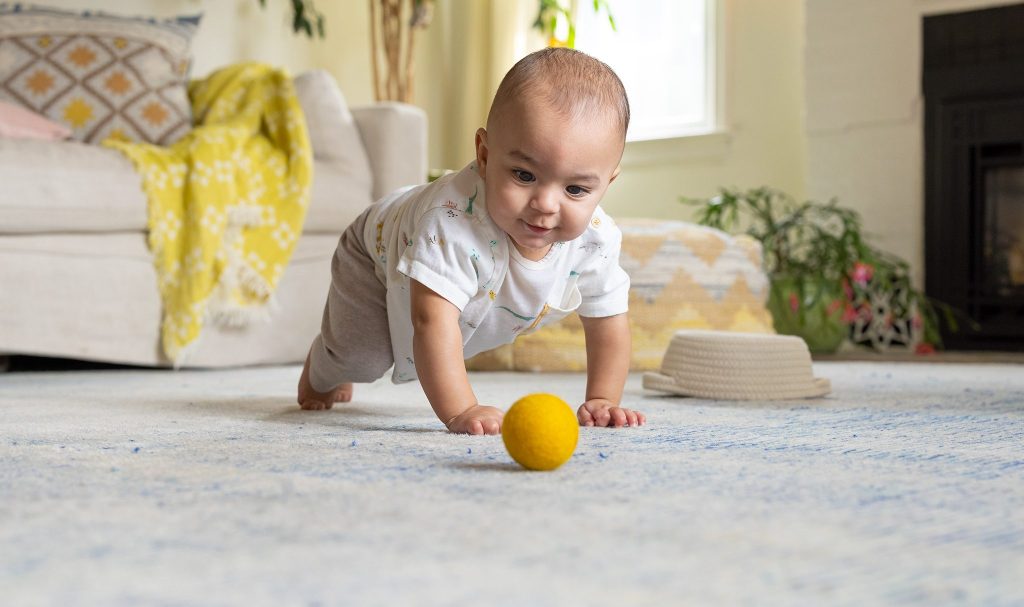
Crawling babies encounter lead risks adults never see because they experience the home at a completely different height, with completely different habits. Adults move through rooms standing up, looking at counters, furniture surfaces, and obvious messes. Babies move through rooms with their hands, knees, mouths, and faces inches from the floor. They touch baseboards, window areas, toy bins, low shelves, tracked-in dirt, and dust that adults may barely register. That difference in body position changes what counts as “the environment” in a major way.
This is why families who say, “The room looks clean,” can still be missing meaningful exposure pathways. A clean-looking floor is not the same thing as a low-dust floor. A slightly worn windowsill is not the same thing as a harmless surface for a baby who pulls up and mouths edges. The Lead Basics for Parents page is useful because it helps families understand that baby lead prevention begins with seeing the room from the baby’s perspective, not the adult’s.
Floor-level life changes the risk
Crawling means constant contact with surfaces that collect dust, soil, and debris. Babies move from rug to wood floor to entryway to toy basket and then bring hands and objects to the mouth over and over. That makes low-level dust one of the most important and most underestimated lead risks in older homes or older apartments. The CDC notes that young children are especially vulnerable because they often put hands and objects in their mouths. Crawling intensifies that exposure pathway dramatically.
The Home Products page is helpful here because it connects floors, toys, mats, furniture edges, and nursery routines into one baby environment rather than treating them as separate categories.
Windows, trim, and corners matter more
Babies do not just encounter the middle of the room. They are attracted to edges, corners, furniture legs, baseboards, and the lower parts of windows. Those are exactly the places where older paint, paint friction, and settled dust can become more important. Adults often ignore those zones unless they see obvious peeling. Babies, on the other hand, build their entire map of the room around them.
The EPA warns that deteriorating lead-based paint and lead dust are major hazards in older homes, especially around windows and other high-friction surfaces. Crawling babies turn those architectural details into daily contact points.
Mobility changes the exposure map overnight
One reason parents feel surprised by crawling-stage lead concerns is that the home may have felt manageable before the baby became mobile. Once a child begins moving independently, every low surface becomes more relevant. The room did not suddenly become more dangerous—the baby’s relationship to the room changed.
Objects become floor-to-mouth pathways
Another major reason crawling babies encounter lead risks adults miss is that the baby is not only touching the floor. The baby is collecting floor dust onto toys, books, pacifiers, teething items, and fingers, then putting those items directly into the mouth. That means floor cleanliness and object cleanliness are tightly linked. A toy is not only as clean as it was when you washed it—it is also as clean as the floor it spent the afternoon on.
The Pregnancy & Baby Exposure page is useful because it makes these contact chains more visible to parents who are trying to reduce risk without becoming overwhelmed.
Adults miss what babies notice physically
Adults do not crawl along windows, pull up on old painted trim, or chew on books and toys after dragging them across the floor. That means adults often underestimate both how many surfaces a baby touches and how quickly dust can move from the environment into the body. Even a room that feels controlled to the adults in it may still present repeated low-level lead pathways to a crawling child if dust, old paint, or contaminated soil have not been addressed.
The FAQ page can help families think through where the baby actually spends time and which surfaces deserve the most attention. That shift—from “What looks risky?” to “What does the baby actually touch?”—is often the most useful mental change parents can make.
What families can do before crawling starts
The best time to reduce crawling-stage risks is often before crawling begins. Wet-clean floors regularly. Pay attention to low painted surfaces. Keep older or damaged furniture finishes out of the nursery if their history is uncertain. Wash toys often. Create one very clean floor-level play zone that the baby uses frequently. The point is not to make every room perfect overnight. It is to make the baby’s main movement zones safer before mobility expands.
If your family spends time in another older home—such as a grandparent’s house—apply the same logic there too. Babies do not distinguish between “our apartment” and “where we visit.” The contact page is useful if you want help thinking through those multi-home routines. For outside references, the EPA’s lead reduction actions and the CDC’s childhood lead prevention resources are both strong guides.
The takeaway
Crawling babies encounter lead risks adults never see because they live at floor level, touch edges and corners adults ignore, and constantly move dust and residue from surfaces to hands, toys, and mouths. Their whole experience of the room is different.
The best prevention step is to look at the environment from the baby’s point of view. Once parents do that, the lead risks in ordinary floors, windows, trim, and toys become much easier to see—and much easier to reduce.